Airbnb : Get Living
Airbnb : Get Living
Communication Strategy
Communication Strategy
Perception Gap Analysis | Market Behaviour
Case Study
Perception Gap Analysis | Market Behaviour
Case Study
Figma

Figma
Gemini

Gemini
Perplexity AI

Perplexity AI


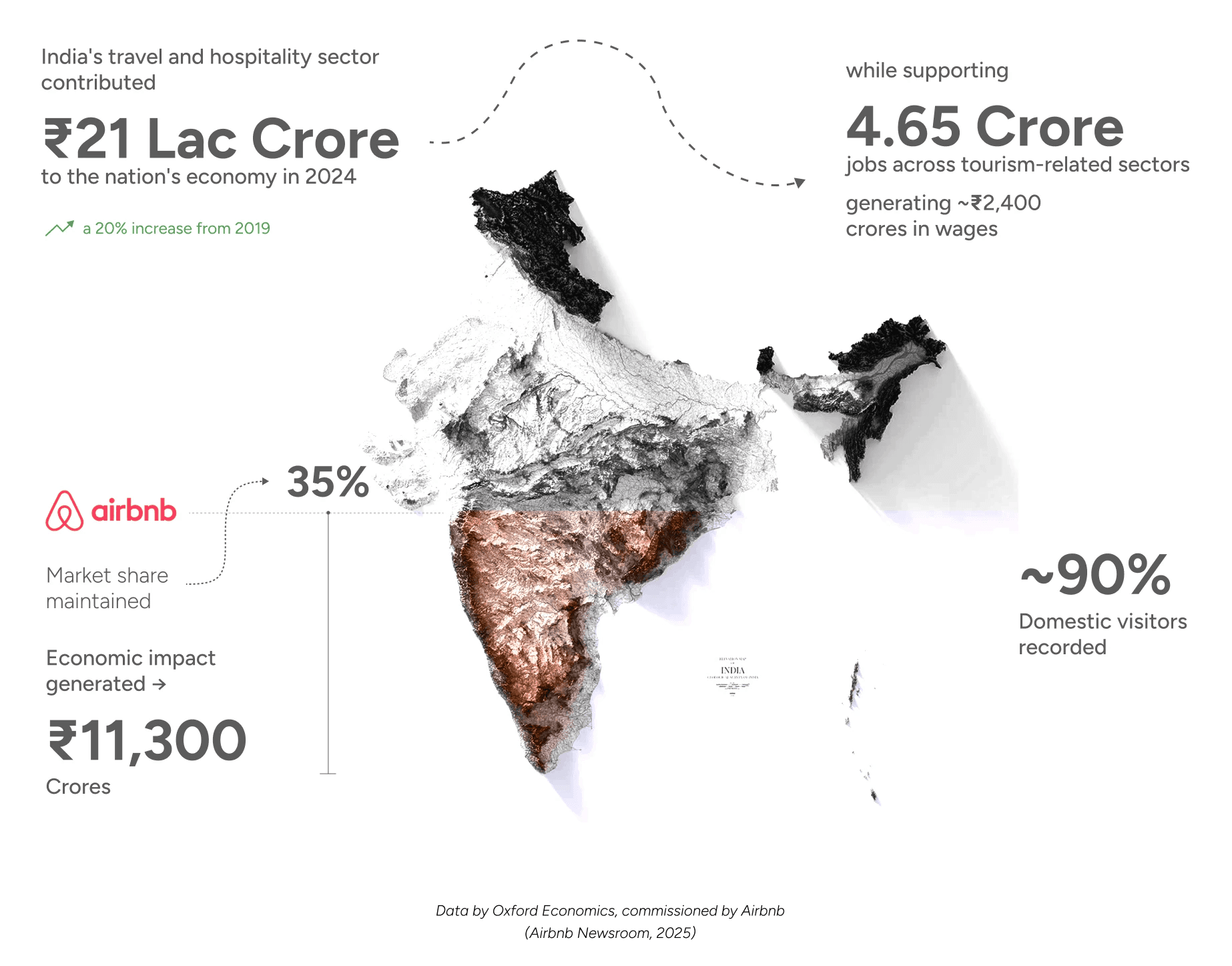
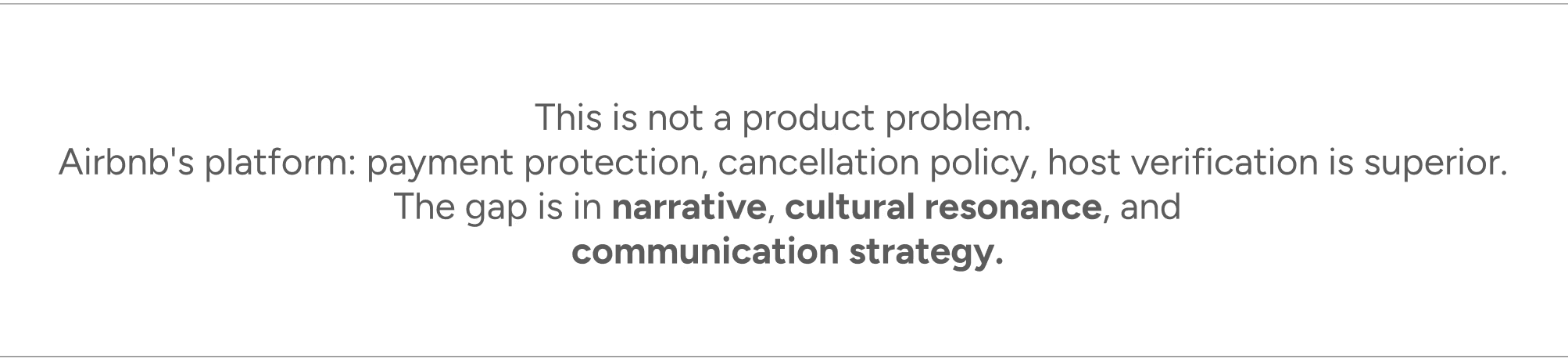
Beneath these growth metrics lies a critical communication, vulnerability that constrains deeper market penetration.
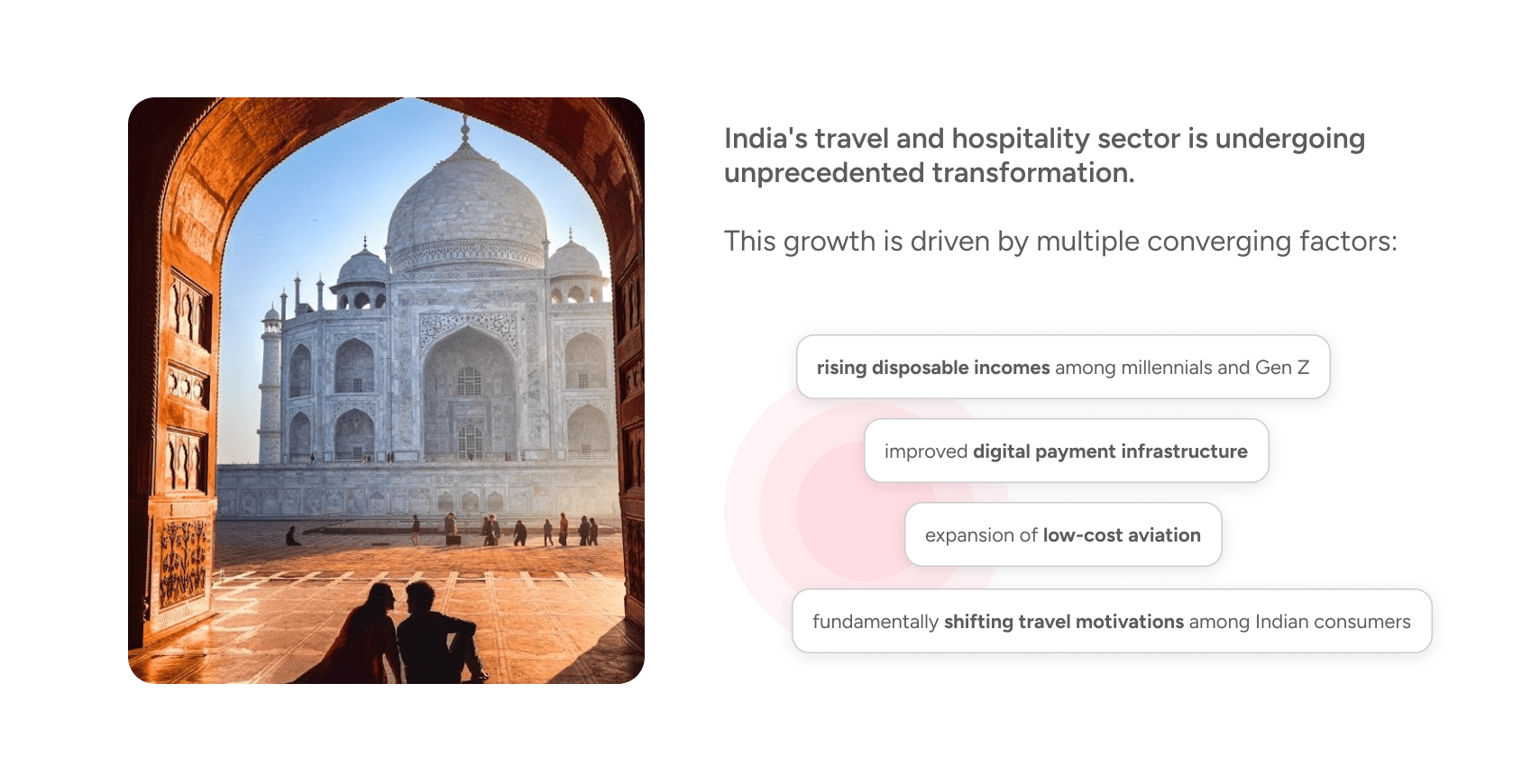
Domestic travel has emerged as the dominant growth engine.
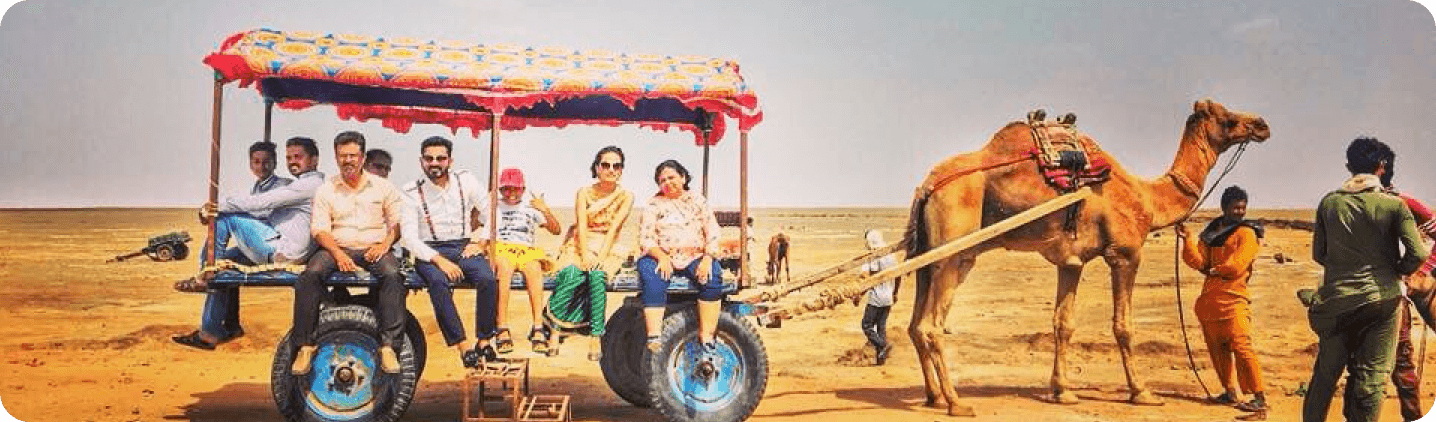
In 2023, India recorded 251 Crore domestic visitor surpassing pre-pandemic peaks (Airbnb Newsroom, 2025). This represents a shift from traditional family vacation patterns (destination-centric, once- per-year holidays) toward experience-driven, frequent travel behaviour among younger demographics.


Channels
Methods, Effectiveness and an imperitive
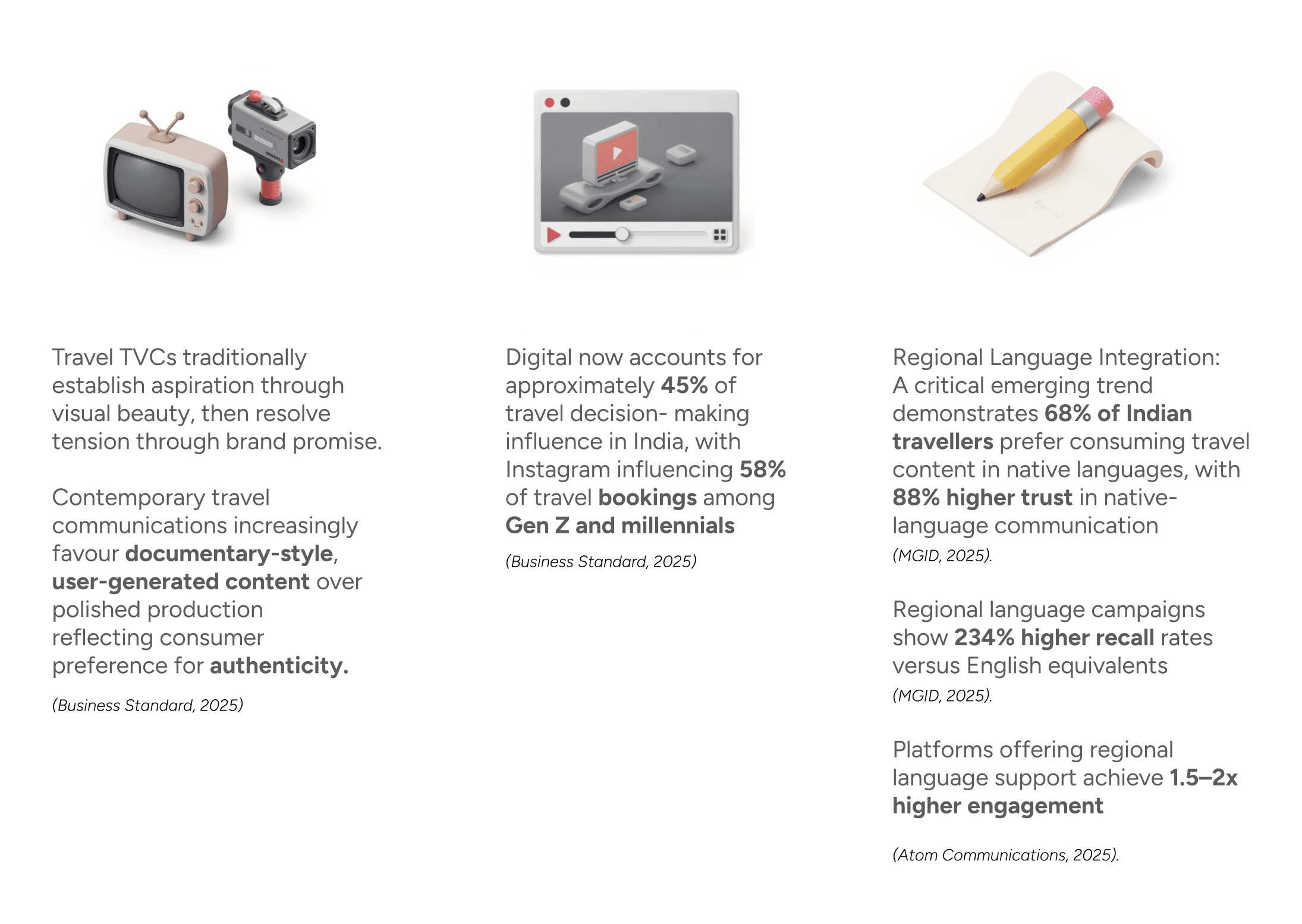
Travel and hospitality communication operates across distinct channels, each serving specific functions in the customer decision journey. Traditional approaches emphasize emotional storytelling through premium production; contemporary approaches increasingly blend documentary-style authenticity with peer-to-peer credibility.



so.. out of short-term rental platforms..
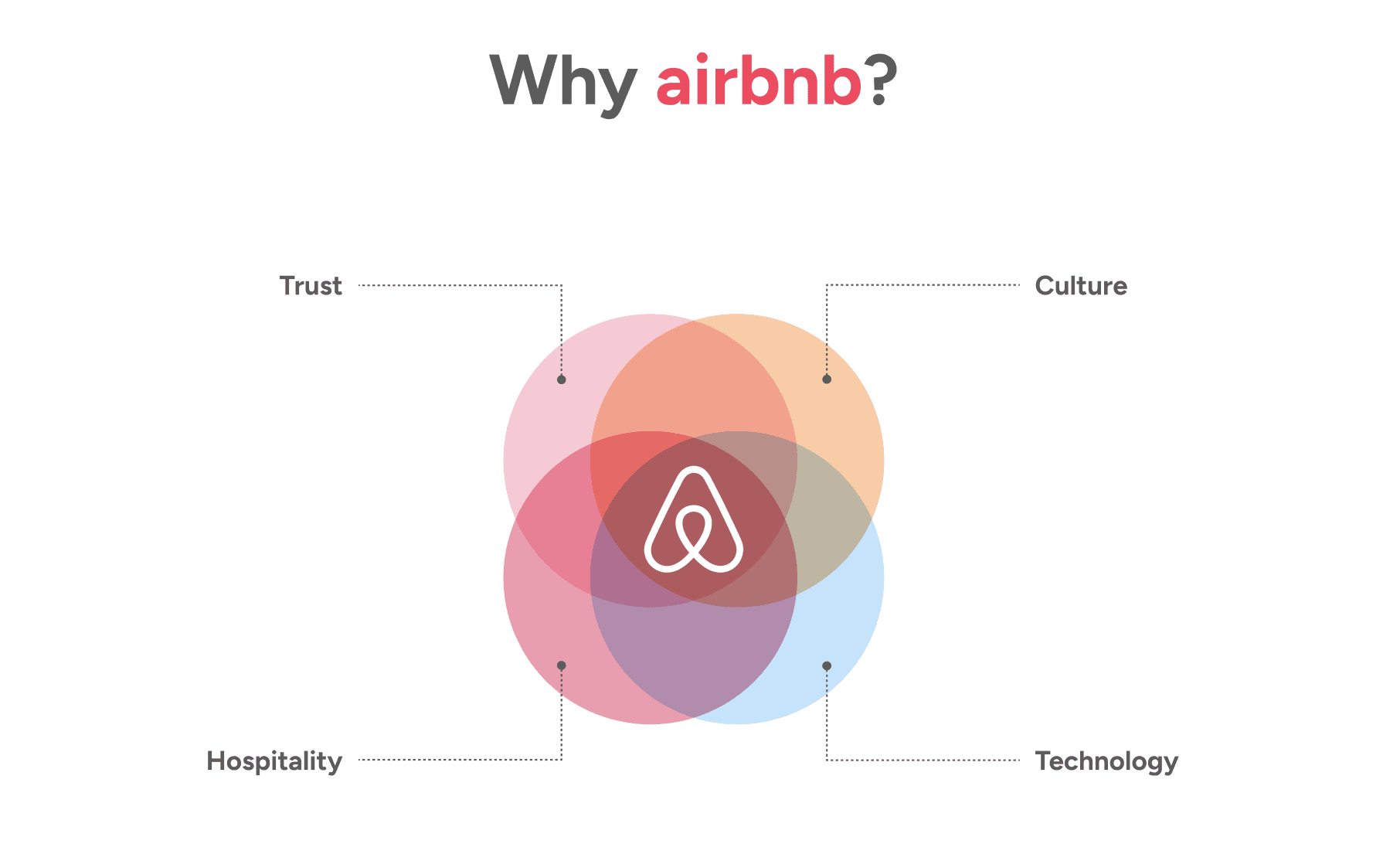
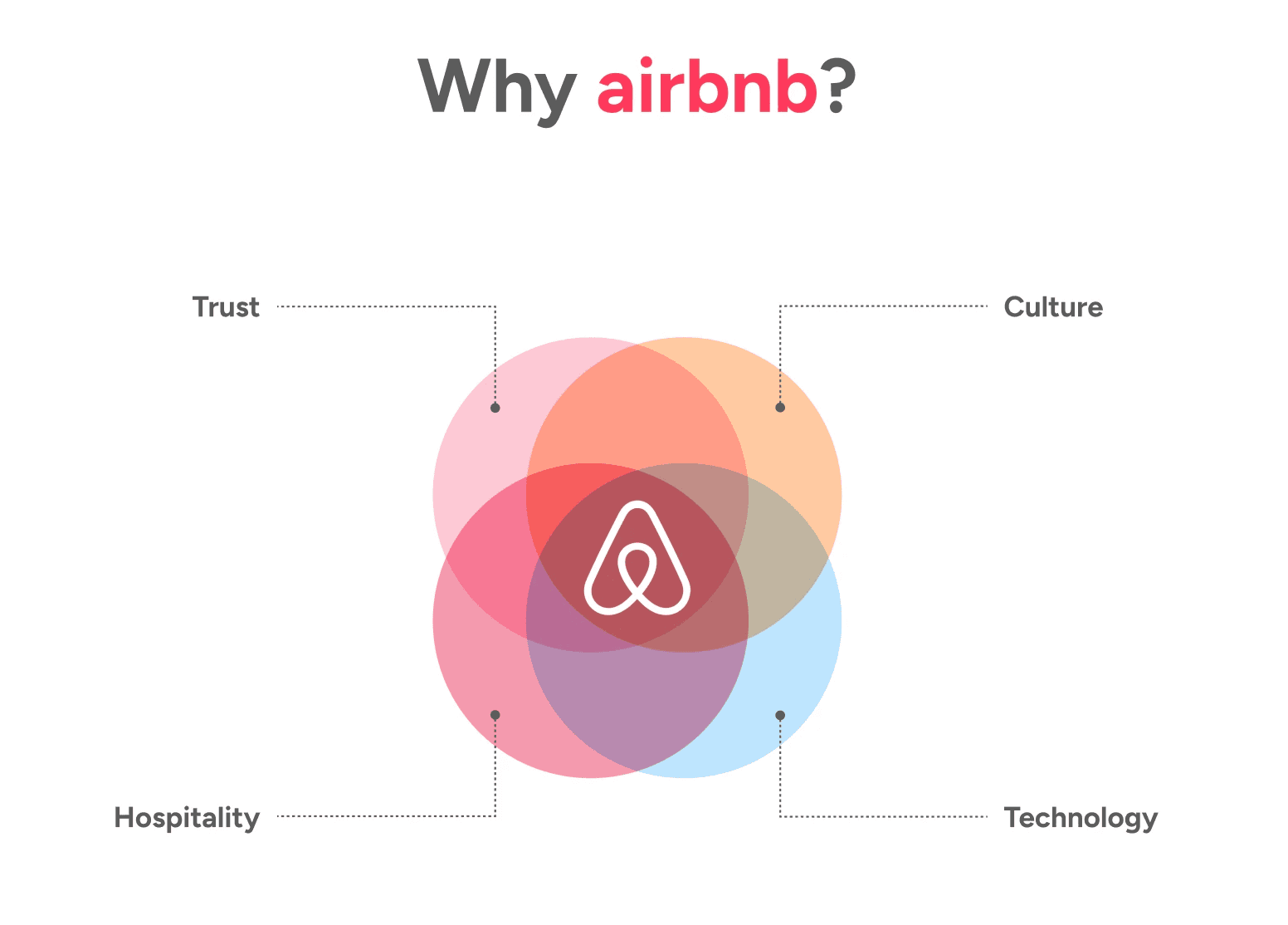
Sitting at the intersection of trust, culture, hospitality and technology -- Airbnb makes for a uniquely rich choice for a communications project
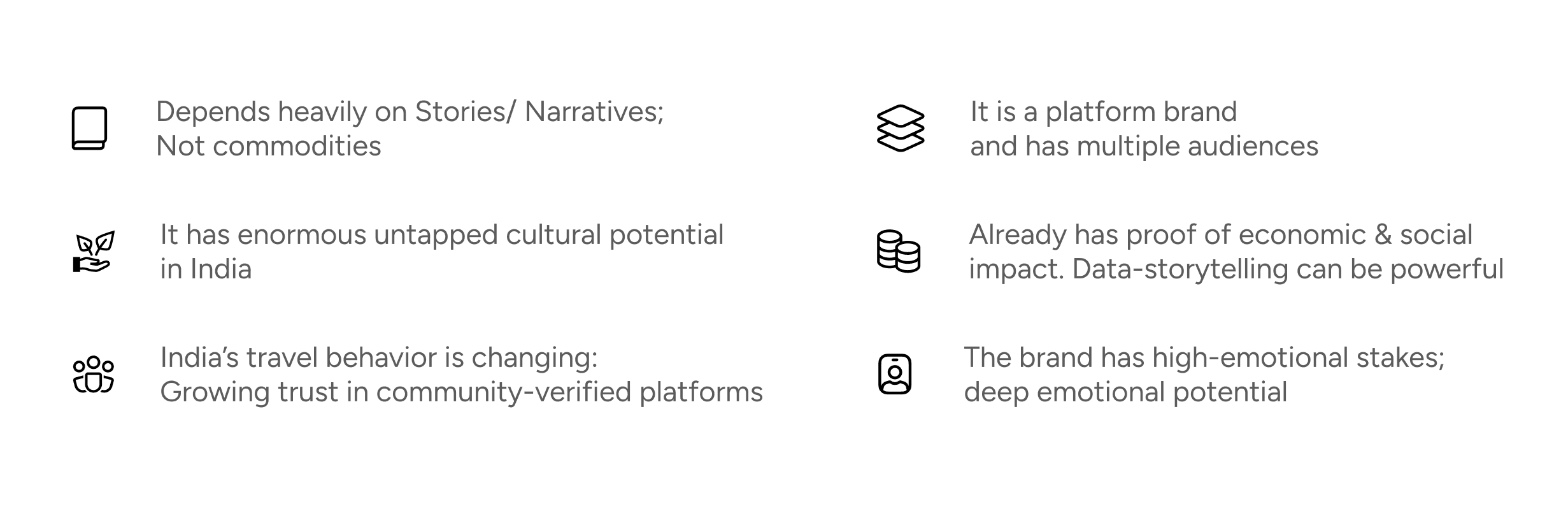
Depends heavily on Stories/ Narratives; Not commodities
It is a platform brand and has multiple audiences
It has enormous untapped cultural potential in India
Already has proof of economic & social impact. Data-storytelling can be powerful
India's travel behavior is changing: Growing trust in community-verified platforms
The brand has high-emotional stakes; deep emotional potential
MARKET STRATEGY
Increase listings across homes, unique stays, and boutique lodging
Deepen host supply, especially in underserved or emerging destinations
Let's talk competition
Competitive positioning
Competitive positioning
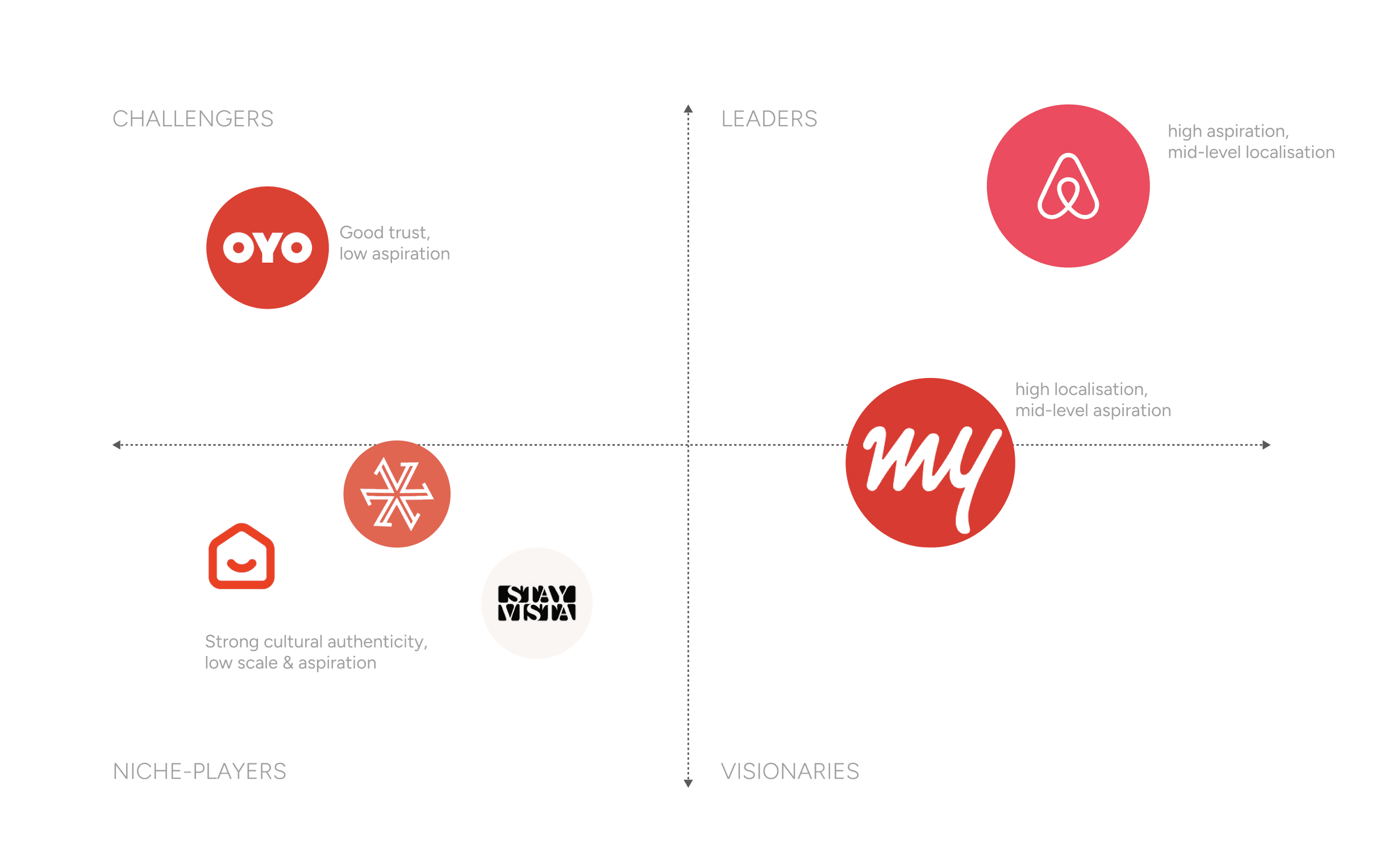
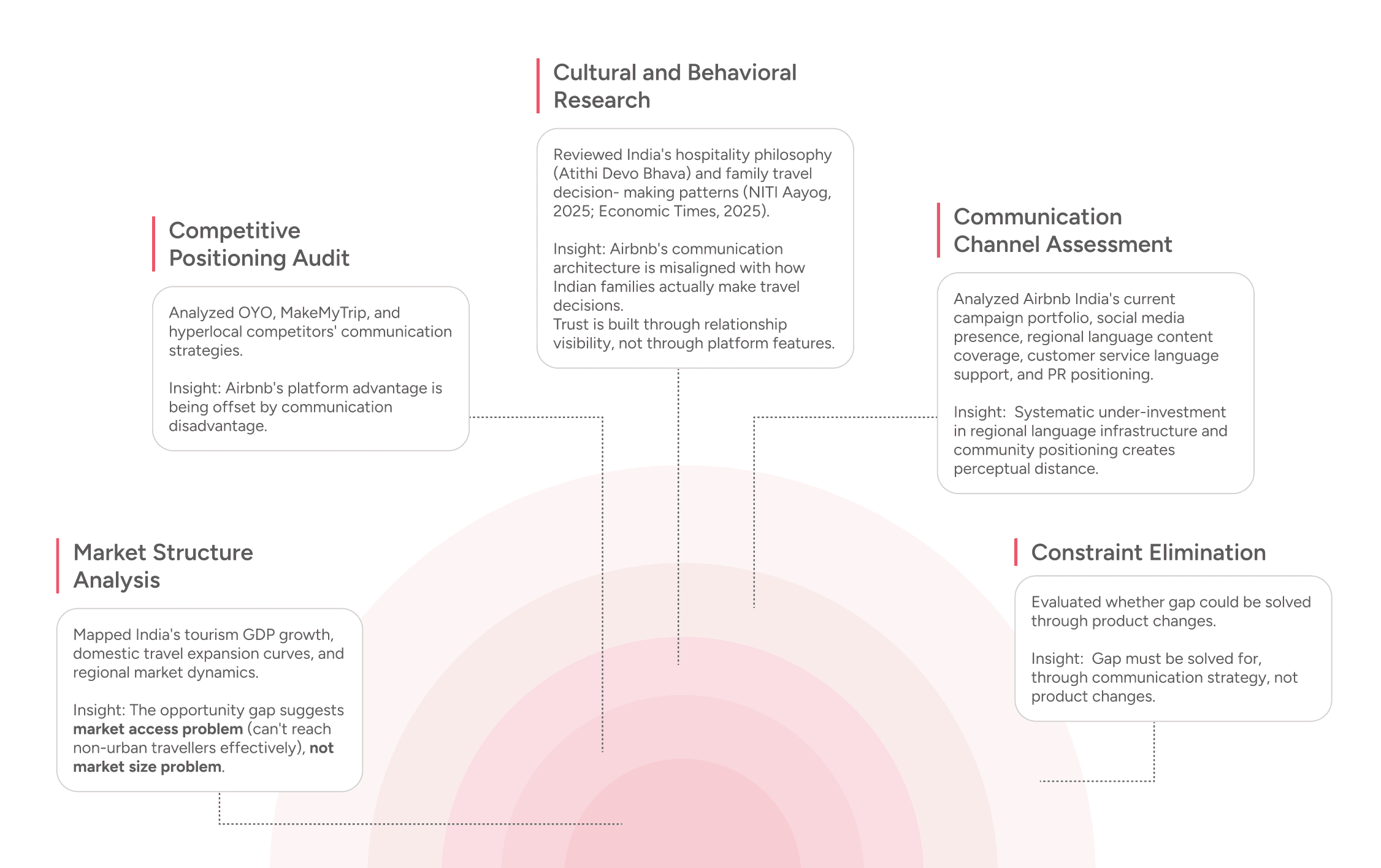
Airbnb's market leadership (35% share) is not under immediate threat; however, marketshare growth is threatened. OYO and MakeMyTrip are gaining share faster in Tier 2–3 markets specically because they communicate in regional languages and emphasize local community integration.
StayVista, Zostel, and Homeyhuts position as "community-first, experience-first, authenticity-first" through micro-influencer partnerships, niche community focus, native language support from inception, and grassroots marketing
Their rapid growth among college-age travelers represents an emerging hinderance.
Some trends we're seeing..

Surge in Domestic Travel & Short-Term Rentals in India
Domestic bookings on Airbnb India have surged by over 30 % YoY, reflecting a clear shift toward private/holiday-home stays over hotels. India’s online accommodation market is expected to grow strongly. Homestays in India are growing faster than many segments: the organized homestay market (outside traditional hotels) is cited to be growing at circa ~11 % CAGR.
Read more
Growing Demand for Experiential & Authentic Travel
This is the body text for card two. It contains detailed information about the card content and can be truncated with a read more link when it gets too long.
Read more
Rise of Solo, Flexible, Digital-Nomad & Remote-Work Stays
Globally, solo travel and “work-cation” trends are growing. The solo-travel market is forecast to expand strongly over the next few years. Airbnb reports increasing interest for shorter stays, off-peak stays, and last-minute stays matching patterns of flexible travellers and remote-workers.
Read moreBelong Anywhere



Airbnb's global positioning for Belong Anywhere" is emotionally powerful: it promises authentic, relational belonging transcending hotels' standardization. In India specifically, stated positioning translates to "Authentic experiences beyond hotels" and "Stay like a local, not like a tourist"
PERCEIVED POSITION AMONG INDIAN TRAVELERS
Qualitative research reveals significant gap between stated and perceived positioning. Indian travellers perceive Airbnb as:
The Core
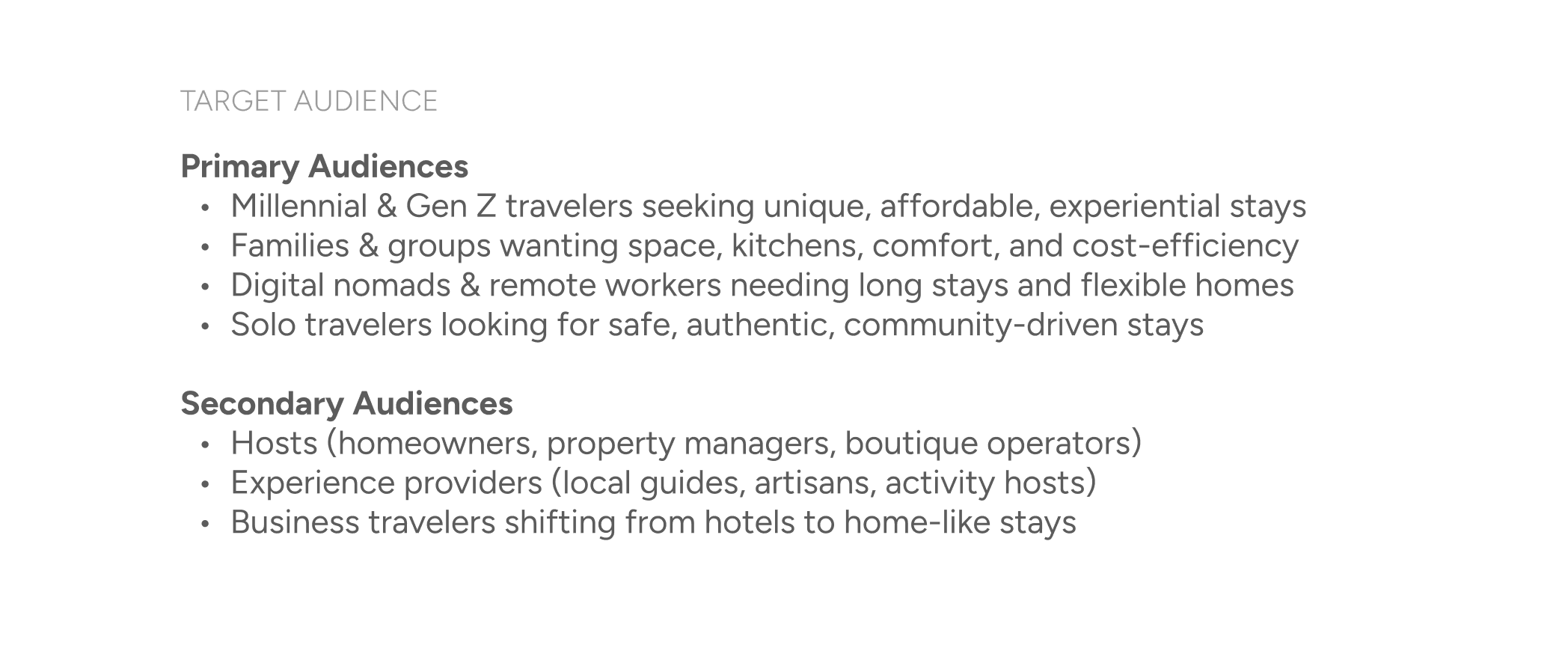
Airbnb's positioning in India suffers from perceptual foreignness, creating a trust gap that prevents conversion among 1st-time users, women travellers, and Tier 2–3 market residents.
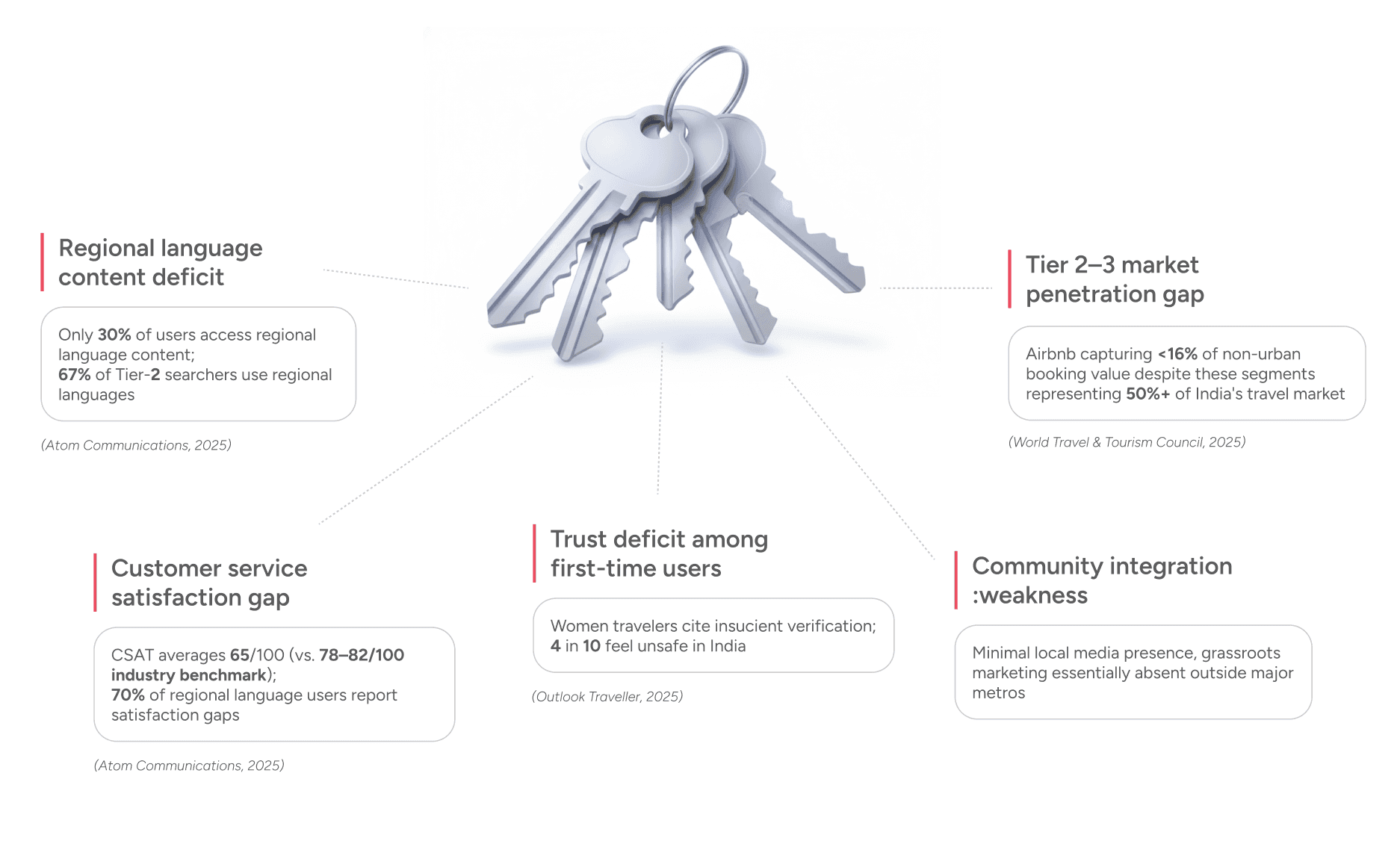
This gap manifests across varied interconnected communication deficits

Regional language content deficit
Only 30% of users access regional language content; 67% of Tier-2 searchers use regional languages
(Atom Communications, 2025)
Tier 2-3 market penetration gap
Airbnb capturing <16% of non-urban booking value despite these segments representing 50%+ of India's travel market
(World Travel & Tourism Council, 2025)
Customer service satisfaction gap
CSAT averages 65/100 (vs. 78-82/100 industry benchmark); 70% of regional language users report satisfaction gaps
(Atom Communications, 2025)
Trust deficit among first-time users
Women travelers cite insufficient verification; 4 in 10 feel unsafe in India
(Outlook Traveller, 2025)
Community integration weakness
Minimal local media presence, grassroots marketing essentially absent outside major metros

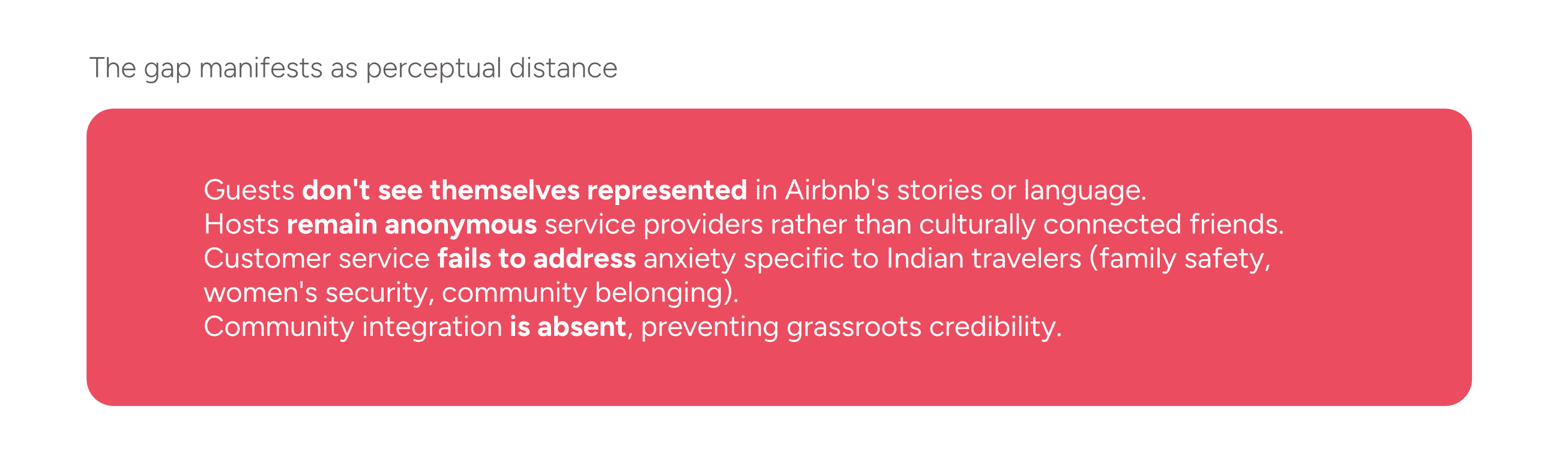
The gap manifests as perceptual distance
Guests don't see themselves represented in Airbnb's stories or language.
Hosts remain anonymous service providers rather than culturally connected friends.
Customer service fails to address anxiety specific to Indian travelers (family safety, women's security, community belonging).
Community integration is absent, preventing grassroots credibility.
The gap is singular and coherent
"foreign-ness"
expresses differently across segments
trust anxiety for
first-timers
exclusion for Tier 2-3
regional travellers
safety concern for
women
THE GAP IS SINGLUAR AND COHERENT
"foreign-ness"
expresses differently across segments
trust anxiety for
first-timers
exclusion for Tier 2-3
regional travellers
safety concern for
women
Atithi→Dost
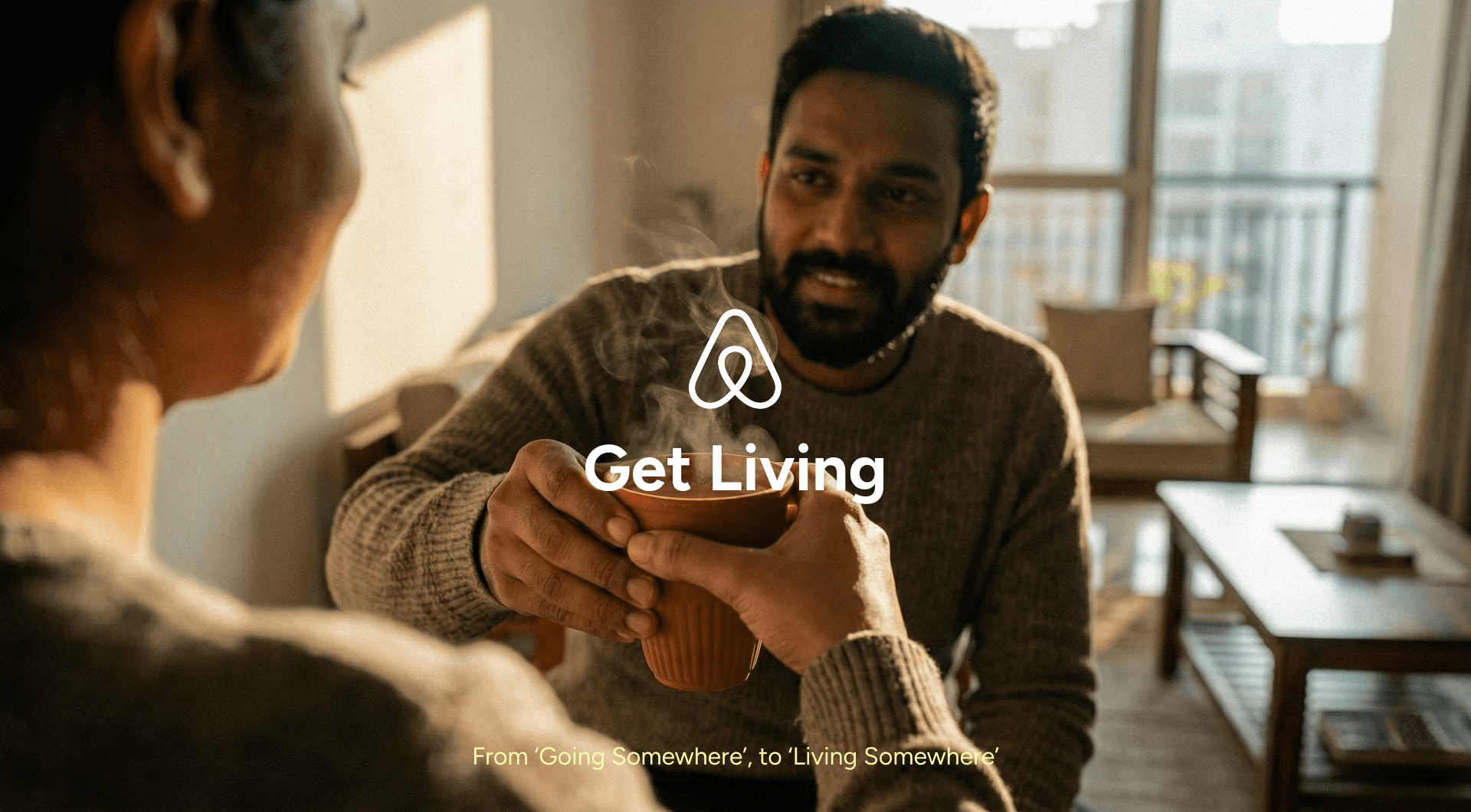
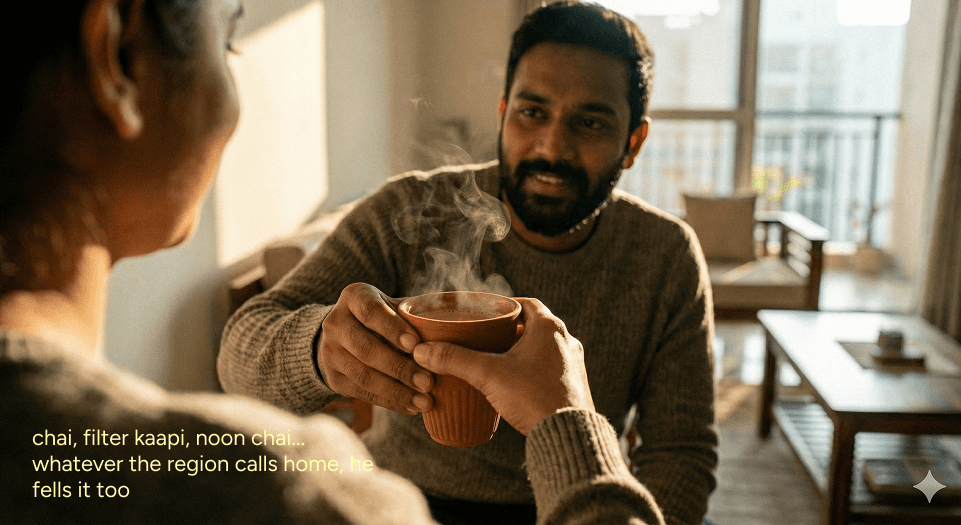
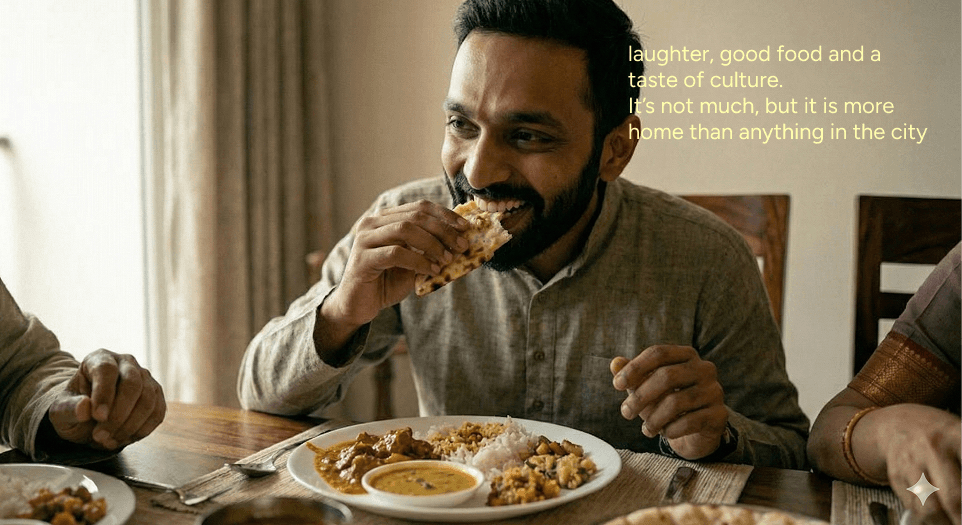
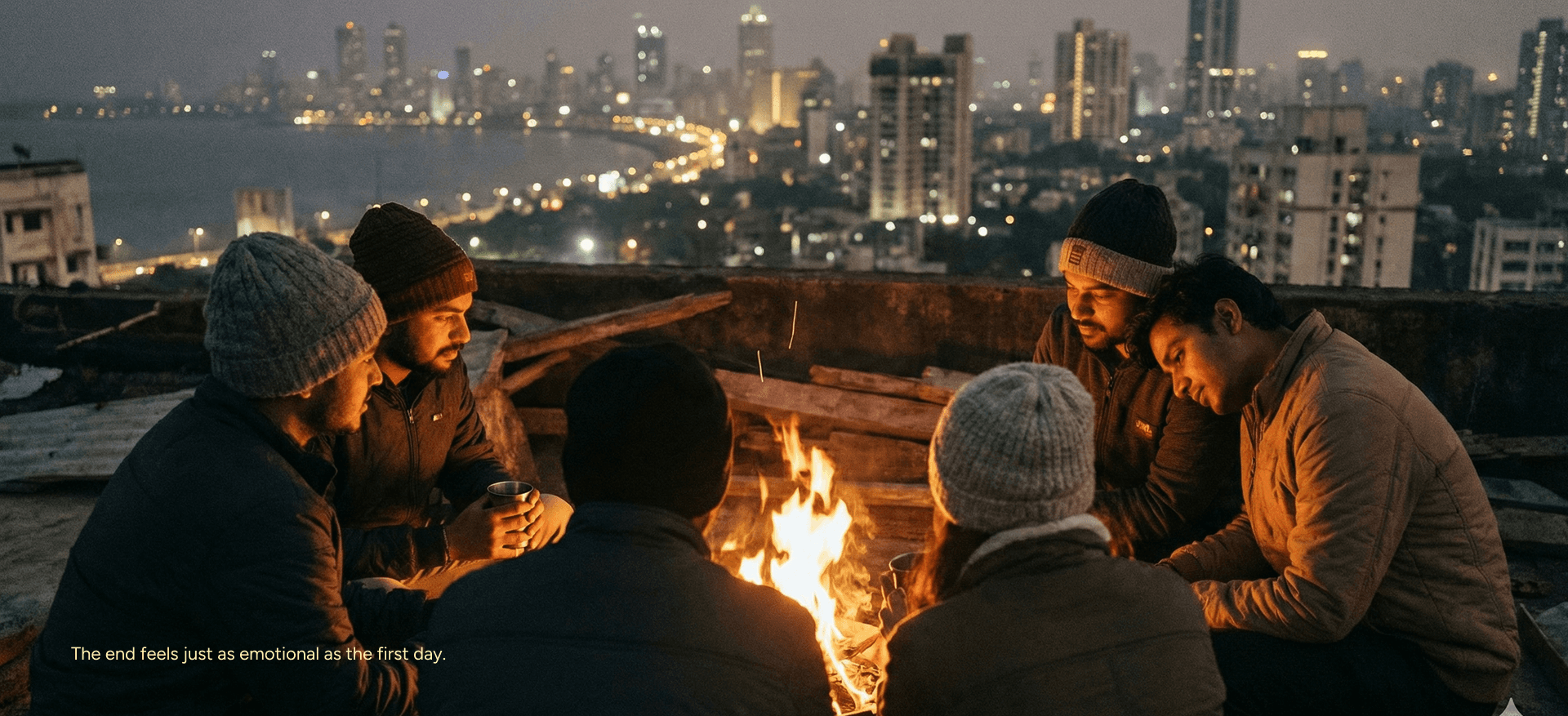
Within this framework, the highest expression of hospitality is when the relationship transcends host-guest formality and becomes genuine friendship. The journey from "Atithi" (honored guest) to "Dost" (friend) is the narrative arc of authentic hospitality.
Airbnb's global positioning for Belong Anywhere" is emotionally powerful: it promises authentic, relational belonging transcending hotels' standardization. In India specifically, stated positioning translates to "Authentic experiences beyond hotels" and "Stay like a local, not like a tourist"


Campaign Objectives & KPIs
Tier 3: Business Impact
45% increase in regional language bookings, 500–1000 hosts onboarded, 10–15% campaign bookings from PR.
Tier 2: Audience Trust
60%+ regional language coverage, 90%+ Cultural Advisory Board approval, 80%+ positive community sentiment.
Tier 1: Brand Positioning
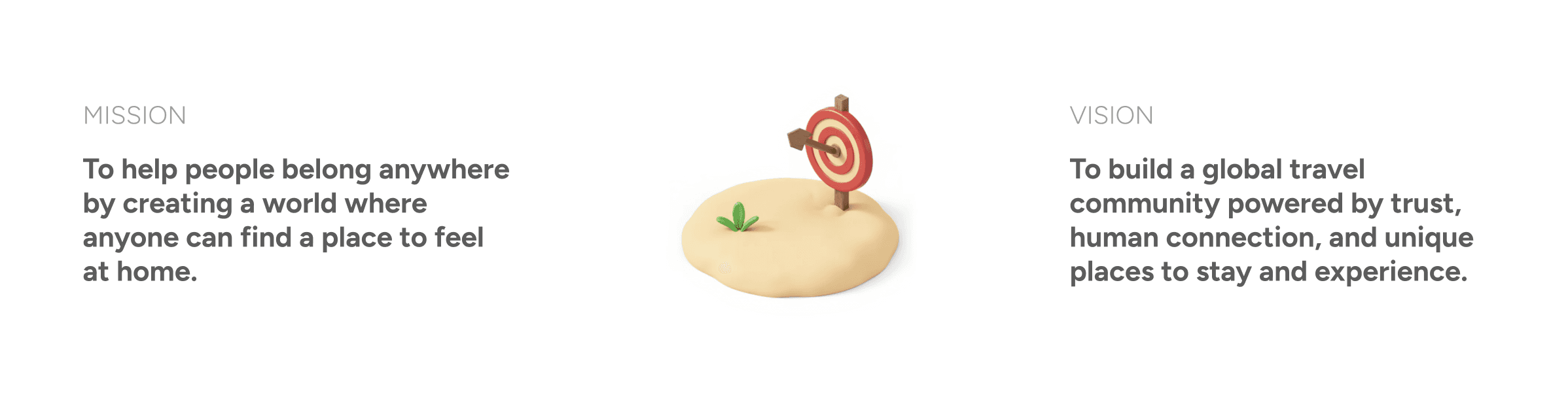
Position Airbnb as a "Cultural Institution," aiming for a 22-point cultural relevance advantage.
Why it works
A Sequential Emotional Journey
Instead of treating trust and aspiration as separate campaigns, the strategy unifies them into a single psychological arc:
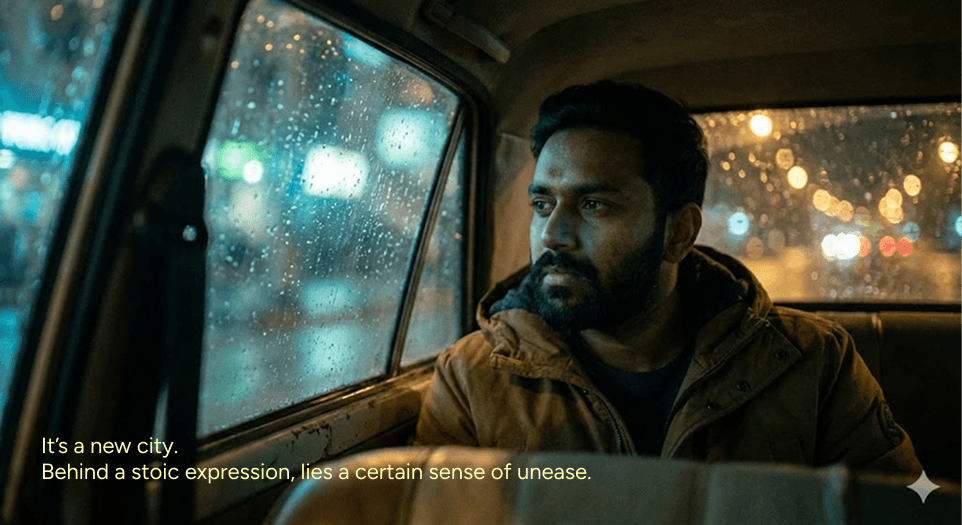
Foreigner → Guest → Friend → Explorer
A Culturally Authentic Foundation
Built on the Indian philosophy of Atithi → Dost, where hospitality is a relational transformation, not a transaction.
The Welcome Cup becomes the emotional "threshold moment" that signals: "You are not just a guest. You belong here."
Multi-Channel Excellence
Excels in TV, regional media, OOH, and customer touchpoints (trust-first environments).
Thrives in digital video, influencer ecosystems, experiential content, PR stories, and social formats (aspiration-first environments).